Students & collaborators

Network

People whose work connects with the questions, methods, and communities around evolutionary dynamics.

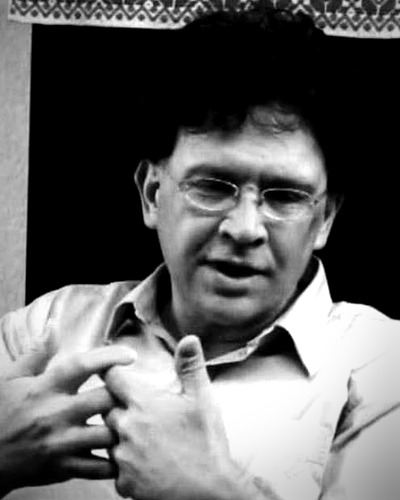
Paul Sniegowski

Paul Sniegowski

Earlham College

Studies how mutation rates evolve and how harmful mutations constrain adaptation. His work combines population-genetic theory with microbial experiments, including studies of the fitness costs of elevated mutation rates in yeast and the evolutionary roles of recombination.

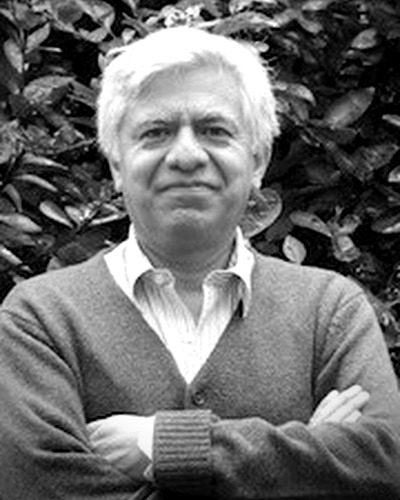
Richard E. Lenski

Richard E. Lenski

Michigan State University

Uses experimental evolution to investigate adaptation, genome change, and the repeatability of evolution. He founded the long-term E. coli evolution experiment in 1988; its independently evolving populations allow direct comparisons of fitness gains, historical contingency, and the emergence of new functions.

Gabriela Gomes

Gabriela Gomes

University of Strathclyde

Develops mathematical models of population dynamics, with particular attention to variation among individuals. Her research examines how differences in susceptibility and exposure interact with selection to shape infectious-disease dynamics, and how accounting for this variation changes models and intervention planning.

Nick Hengartner

Nick Hengartner

Los Alamos National Laboratory

Works on statistical methodology and the mathematical foundations of learning from data. His research includes nonparametric regression: developing nearest-neighbor estimators and establishing when they recover underlying relationships reliably, how quickly their errors decrease, and how to adapt them to unknown data distributions.

Bernard Ycart

Bernard Ycart

Université Grenoble Alpes

Studies probability and statistical inference for stochastic population models. His work on Luria–Delbrück fluctuation experiments develops methods for estimating mutation frequencies and relative fitness from mutant counts, including robust approaches to the unusually large counts generated by early-arising mutations.

Erika Elizabeth Rodríguez Torres

Erika Elizabeth Rodríguez Torres

Autonomous University of the State of Hidalgo (UAEH)

Applies computational and mathematical methods to physiology and neuroscience. Her research includes nonlinear analysis of physiological time series, fractal representations of signals associated with cognitive impairment, and Markov-chain approaches to respiratory sinus arrhythmia and cardiovascular regulation.

Pablo Padilla Longoria

Pablo Padilla Longoria

IIMAS, National Autonomous University of Mexico (UNAM)

Works on nonlinear differential equations, dynamical systems, and optimization. His applied research connects mathematical and physical models with biology, finance, and archaeology, while another strand explores music and acoustics, including the use of mathematical methods in algorithmic composition.

Jorge X. Velasco-Hernández

Jorge X. Velasco-Hernández

Institute of Mathematics, UNAM

Develops mathematical models of infectious-disease transmission and control. His work connects population dynamics with public-health questions, including vaccination strategies, environmental transmission, and the effects of ecological and evolutionary processes on epidemic spread.

Valeria Souza

Valeria Souza

Institute of Ecology, UNAM

Investigates microbial diversity, speciation, and coexistence through evolutionary ecology and molecular evolution. Much of her work centers on the nutrient-poor oasis of Cuatro Ciénegas, Mexico, asking how ancient microbial lineages persist and how cooperation and interaction networks structure their communities.

Fernando Saldaña

Fernando Saldaña

Complutense University of Madrid

Develops and analyzes infectious-disease models to evaluate vaccination and other public-health interventions. His work combines dynamical systems, optimal control, and numerical simulation, with applications to human papillomavirus, COVID-19, and vector-borne infections.

Gerardo García-Lerma

Gerardo García-Lerma

Centers for Disease Control and Prevention (CDC)

Investigates HIV prevention and antiretroviral resistance. His research uses preclinical macaque models to assess preventive drug regimens, including pre-exposure prophylaxis, and examines how drug-resistance mutations affect viral fitness and the evolution of HIV under treatment pressure.

Cláudia Pio Ferreira

Cláudia Pio Ferreira

São Paulo State University (UNESP), Botucatu

Uses mathematical and computational models to study biological populations. Her work includes age-structured models of mosquito behavior and phenotypic plasticity, alongside differential-equation and cellular-automaton approaches to population dynamics and the control of vector-borne disease.

Cyrille Merleau Nono Saha

Cyrille Merleau Nono Saha

Formerly Max Planck Institute for Mathematics in the Sciences

Studies RNA structure and evolution using computational mathematics. His work includes evolutionary algorithms for RNA folding and inverse folding, probabilistic models of three-dimensional RNA structure, and genotype–phenotype maps that connect sequence changes with structural and evolutionary properties.

Guillaume Martin

Guillaume Martin

CNRS · Institute of Evolutionary Science of Montpellier (ISEM)

Combines mathematical theory and experimental evolution to study adaptation and evolutionary rescue under environmental stress. His work uses fitness-landscape models and real-time tracking of E. coli populations to examine responses to antibiotics, predators, and other changing selective pressures.

Lindi Wahl

Lindi Wahl

Western University

Builds mathematical models of microbial evolution, focusing on the fate of new mutations during adaptation. Her research asks how changes in the mutation spectrum influence bacterial evolution, and how mutations contribute to antibiotic resistance, host shifts, and adaptation to environmental change.

Luis Enrique Eguiarte Fruns

Luis Enrique Eguiarte Fruns

Institute of Ecology, UNAM

Combines population genetics, genomics, and evolutionary ecology to study biological diversity. His research includes the evolution and domestication of Mexican plants, with particular attention to agaves, and connects genetic variation and phylogenetic history with conservation and plant–pollinator relationships.

Sophie Pénisson

Sophie Pénisson

City of Hope & TGen · Université Paris-Est Créteil

Develops stochastic models of populations, with a focus on branching processes, extinction, and lineage dynamics. Her work spans epidemic risk and mutation–selection balance, and applies mathematical and statistical methods to cancer evolution, cancer risk, and early detection.

Thomas Bataillon

Thomas Bataillon

Aarhus University

Combines evolutionary genetics and bioinformatics to study how mutations affect fitness and fuel adaptation. His research develops statistical models of mutational effects and fitness landscapes, bringing together experimental measurements and population-genomic data to understand the genetic basis of evolutionary change.

Alexandre Colato

Alexandre Colato

Federal University of São Carlos (UFSCar)

Uses mathematical models and computer simulations to study ecological population dynamics. His work includes age-structured predator–prey systems and network models of aphids and their predators, examining how life stages, predation, and spatial interactions affect population stability.

Ben Galeota-Sprung

Ben Galeota-Sprung

University of Pennsylvania

Studies microbial adaptation and the evolution of mutation rates. His work has quantified the fitness costs of harmful mutations in yeast; more recent research in the de la Fuente lab investigates the genetic basis of bacterial adaptation to antimicrobial peptides.

Benjamín Alfonso Itzá Ortiz

Benjamín Alfonso Itzá Ortiz

Autonomous University of the State of Hidalgo (UAEH)

Works in dynamical systems, operator algebras, and applied mathematics. His publications include spectral properties of tridiagonal operators, classification problems in symbolic dynamics, and stability analysis of delayed economic models, alongside collaborative studies of physiological time series and sleep transitions.

Ellen Baake

Ellen Baake

Bielefeld University

Develops mathematical population genetics linking mutation, selection, recombination, and random genetic drift. A central theme is the relationship between the evolution of populations and their ancestral histories, using stochastic processes and genealogical constructions to analyze how genetic variation is maintained and reshuffled.

Fernando Cordero

Fernando Cordero

BOKU University, Vienna

Studies stochastic processes arising in population genetics. His research connects forward-time changes in allele frequencies with backward-time genealogies, using duality methods to analyze mutation, selection, and random environments in models such as the Moran and Wright–Fisher processes.

Santiago F. Elena

Santiago F. Elena

Institute for Integrative Systems Biology (CSIC–University of Valencia)

Studies how RNA viruses evolve, adapt to hosts, and redirect host-cell resources. His research combines experimental evolution, molecular biology, omics, and mathematical modeling, including studies of how environmental stress can shift plant–virus interactions from harmful toward mutually beneficial.